 Many a young Christian has ruined his life because of unholy alliance in marriage. Marriage is a yoke. The Bible forbids unequal yoke (2 Cor 6:14). "You shall not plow with an ox and a donkey together" (Dt 22:10). Both the Old and the New Testaments strongly condemn intermarriage with unbelievers. Intermingling the "holy seed" with the unconverted is called as "trespass, transgression, iniquity and guilt" (Ezra 9:1-6). Even a widow who is a believer is not permitted to marry an unbeliever. "She is at liberty to be married to whom she wishes, only in the Lord" (1 Cor 7:39).
Ox Weds Donkey! – Do Not Be Unequally Yoked Together With Unbelievers
Many a young Christian has ruined his life because of unholy alliance in marriage. Marriage is a yoke. The Bible forbids unequal yoke (2 Cor 6:14). "You shall not plow with an ox and a donkey together" (Dt 22:10). Both the Old and the New Testaments strongly condemn intermarriage with unbelievers. Intermingling the "holy seed" with the unconverted is called as "trespass, transgression, iniquity and guilt" (Ezra 9:1-6). Even a widow who is a believer is not permitted to marry an unbeliever. "She is at liberty to be married to whom she wishes, only in the Lord" (1 Cor 7:39). In the “Confessions“, Augustine lays out the story of his life, opening himself up as completely as possible to God and to his readers. In doing so, he is praising God for His salvation and His grace and to inspire others to actively seek their return to God. “Yet through loving humility, we find our way back to You. You purify our evil dispositions; you are merciful towards the sins of those who confess to You; You hear the groans of captives and set us free from the bonds we have forged for ourselves.” (The Confessions 1997, Book 3, paragraph 16) This salvation by grace alone made all the difference in my life. Romans 5:1-2 states that “For by grace are ye saved through faith, not of yourself, it is the gift of God. Therefore since we have been justified through faith, we have peace with God through our Lord Jesus Christ, through whom we have gained access by faith into this grace in which we now stand.”
  Suicide is said to be the third-leading cause of death in India.Isn’t it astonishing to know that a mortality rate of 120 000 people committing suicide in India would mean more than 300 suicides per day, not less than 14 suicides per hour and one suicide in every five minutes? Moreover, isn’t it heartbreaking to come to know more than 400 000 people attempting to commit suicide in India would disclose about 1100 attempted suicides per day, about 46 attempted suicides per hour and one suicide attempt in every one minute and thirty seconds?
 Why can't we be real before God? Tell Him what we feel, confess to Him
if we are perplexed or confused, share with Him our fears and dreams,
and ask Him to show us which way we should proceed, all the while
expressing our confidence in His love, wisdom and power. What is going
to succeed, an honest and sincere cry for help, or a pronunciation of
the right words without any conviction behind them? The Bible is so very true when it says that we do not receive because we do not ask (Jas.4:2). Is it not silly of us not to receive the things God wants to give us just because we would not ask? How 'poor' we can be because of a silly understanding of being positive!
Why can't we be real before God? Tell Him what we feel, confess to Him
if we are perplexed or confused, share with Him our fears and dreams,
and ask Him to show us which way we should proceed, all the while
expressing our confidence in His love, wisdom and power. What is going
to succeed, an honest and sincere cry for help, or a pronunciation of
the right words without any conviction behind them? The Bible is so very true when it says that we do not receive because we do not ask (Jas.4:2). Is it not silly of us not to receive the things God wants to give us just because we would not ask? How 'poor' we can be because of a silly understanding of being positive! Solomon gave a piece of advice to people that they should not be excessively righteous (Eccl.7:16). What does this mean except that we should not take righteousness to extremes? Isn’t it true that some well meaning people foolishly extend themselves beyond what God requires and, as a result, end up in an unnatural, unrealistic and impractical approach to righteousness or spirituality? . . . . But in seeking to be really godly, they went beyond what God wanted, and they got sidetracked with silly little issues (e.g., “not touching”), missing the main point (Matt.23:23-25).Like Paul said, all these types of foolish ways look as though they will make us godly (Col.2:23). But they are deceptive. Generally speaking they make us feel superior to others around us. When we begin to go in these directions it does not look as though we are making a mistake. We think we have found a secret of godliness. But even though the deviation may be small in the beginning, ultimately it leads us far away from the goal.
  Islam makes up around 20% of the world's population. It is the second largest religion in the world, trailing only Christianity. Muslims are spread primarily over the areas of North Africa, the Middle East, South-Central Asia, and Indonesia. Although Islam began in Saudi Arabia, non-Arab Muslims now outnumber Arab Muslims by a ratio of almost three to one. Also, the four nations with the largest number of Muslims today are all outside the Middle East. Indonesia-166 million (88% of the population); Pakistan-111 million (97%); Bangladesh-97 million (85%); and India-93 million (11%). Do you know that Islam is the fastest growing religion in the world today? Do you know that a significant number of immigrants who come to the United States are Muslims? And do you know that these immigrants come from many Islamic countries or countries with large communities of Muslims? Do you know that an estimated 4 to 6 million Muslims reside in the United States?
  "And if a stranger dwells with you in your land, you shall not mistreat her/him. The stranger who dwells among you shall be to you as one born among you, and you shall love her/him as yourself; for you were strangers in the land of Egypt: I am the Lord your God" (Lev. 19:33-34, NKJV) There is much we can learn about our Asian neighbors, such as how they view themselves, what they believe about family, and why they have come to America. The more we know, the greater our understanding and enjoyment of Asian individuals-and the easier it is to share the good news of Jesus Christ with them. Below are a few facts about Asians in general.
 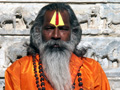 Hinduism is believed to be the oldest living religious traditions in the world. There are approximately one billion Hindus, making Hinduism the third largest religion in the world after Christianity and Islam, of whom approximately 890 million live in India (around 82% of India's population). It is estimated that adherents to Hinduism make up around 15% of the world's population. Other countries with large Hindu populations include: Bangladesh (11%), Bhutan (25%), Fiji (41%), Mauritius (50%), Nepal (89%), Sri Lanka (15%), Surinam (27%), and Trinidad (25%). Countries like Indonesia, Malaysia, South Africa, Tobago, and Guyana also have large number of Hindus. Nepal is the only nation where Hinduism is the state religion. There are more than two million Hindus in North America. Christian must consider Hindus as one of the largest people groups in their mission agenda. In the following paragraphs, we will learn about Hinduism in nutshell for the missional purposes.
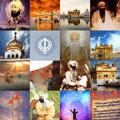 Sikhism founded on the teachings of Guru Nanak Dev and nine successive gurus in fifteenth century Northern India, is the fifth-largest religion in the world. The history of Sikhism began with the birth in 1469 AD of Guru Nanak Dev. The initiation (baptism) ceremony and other traditions of the religion were formalized by 1699 AD. This system of religious philosophy and expression has been traditionally known as the Gurmat (literally, the counsel of the gurus) or the Sikh Dharma. Sikhism originated from the word Sikh, which in turn comes from the Sanskrit root sisya meaning "disciple" or "learner", or siksa meaning "instruction". Sikhism advocates the pursuit of salvation through disciplined, personal meditation on the name and message of God. A key distinctive feature of Sikhism is a non-anthropomorphic concept of God, to the extent that one can interpret God as the Universe itself.
  Who we are before God is much more important than what we do for Him. From this message to Zerubabbel we can deduce the kind of people God is looking for. At least three qualities stand out: First God uses those who are humble. Not the pushy type or those who seek the spot light but are ‘lampstands’ filled with God’s gentle spirit. Second, God can use only those who are available: like these olive trees, people who are ‘there’ and ready to feed and serve others. Finally, God delights to anoint and use people who are reliable, who like Joshua and Zerubabbel stand continuously in the presence by the Lord. Humble, available and reliable. Are you someone God can use?
 A recent book that’s appealing to a lot of post-moderns titled The Third Jesus: The Christ We Cannot Ignore by Indian-born doctor-turned-guru Deepak Chopra has got a lot of people seriously interested in thinking about Jesus–albeit in a different way. Definitely not in the way Jesus would want you to think about Him. This is a dangerous philosophy floating around with a lot of mumbo-jumbo sticking to it, much to the delight of unhappy Christians. Chopra, author of over 49 books on new-age subjects, portrays Jesus as a mystical person not the Savior of the world, certainly not an exclusive Savior. Jesus is not the only son of God, He is not the only way to heaven, He is not the exclusive God and the only God that orthodox or Biblical Christianity believes. To Chopra, Jesus would never offend homosexuals, or sinners. He simply accepts them. He is here to make us all experience God-Consciousness–a term confusing and bewildering that many despaired Christians find riveting due to its esoteric appeal. Sadly, many Christians who don’t understand the deceptions of Eastern philosophies like Yoga and New Age would easily shift their worldview to this new-age claptrap.
  Most of the early years of my life, I lived a life of illusion trying to cover the vacuum in me through food, friends, entertainment, education and work. My conscience knew for the most part what was right and what was wrong. Yet I leaned towards doing what is wrong. I was never able to prevail against the power of sin. I tried to beat the shortcomings in my life, but to my dismay all the contending was in vain. I knew my life was being led in a way opposite to where my own conscience accused me. But I was stubborn and made all excuses and justifications to lead my life the way I wanted. Gradually my conscience started to get hardened and I found myself spiritually estranged and in bondage to all kinds of evil deeds. I used to wonder if there was ever a way out of the burden some, monotonous cycle of life's misery.
 The older and more mature in the Lord I become, the more I have learned to simplify my life and personal goals. Years ago my personal mission statement, vision statement, and goals were about two pages long. Now they are all one short sentence: “Love God and love people.” In my opinion, many of the popular self-help teachings in books today are for people that don’t know themselves or God very well. The more you mature in the Lord the less you rely on these “training wheels.” Many self-help teachers and motivational speakers get into things that are very practical, but without the leading of the Lord it is often akin to humanism.
 In our humanity, we find a ‘false richness’ in the many things that surround us. We find our fulfillment in the words of encouragement from our friends; we lust for pleasure and comfort; we run after things that we think really matter; we find ourselves in the secular game of being fashionable and relevant and ‘well-put-together’. In his words Jesus asks us to embrace our poverty. We are the frail and worn, the weak and needy, the sick and wanting, the hidden and poor. Through our unique walks of life, we encounter our own poverty. We are the poor, not the rich. When Jesus speaks of poverty, He does so to imply that on our own we are capable of little. We are vulnerable to weaknesses in our flesh, weakened by the gross sinfulness of the world, and powerless to fight the attacks of the enemy. On our own we do not amount to much. At the end of the day, we are possessors of nothing.
 I think Indian people are great worriers by nature. Just think about your parents for a second: most Indian parents worry about their mortgage payments, car payments, household expenses, children’s expenses, vacation expenses, they worry about their job security, about their promotion opportunities, they worry about their wife/husband, kids, family in India/North America, and they worry if they’re being Christ-like examples to their kids, if the Church is growing...there are very few things Indian parents don’t worry about, and fewer things they aren’t afraid to tell their kids that they worry about those things! And then there’s our generation we worry about our parents and all their worries, we worry about friends, grades, whether we’ll get into A university/college, then we worry about WHICH university/college we’ll get into, we worry if we’re living how God wants us to, if there are enough youth in our youth group, we worry about our jobs, our future careers, our future families, and then we worry about our future worries . . .
  With over 1.5 billion people in South Asia and about twenty-five million in the diaspora,10 people of South Asian origin play a major role in the world today. Many multi-nationals companies see it as a powerful emerging market for a knowledge-based economy, a pool of resource talent and rich cultural ideas. The modern urban South Asian diaspora is significant, not only because it represents part of an evolving world culture and a cross-section of the world’s major religions, but a vast mission field whose evangelization will have a positive multiplier effect to the billions of souls in South Asia and beyond.
 Above All Powers, Above All Kings - Above All Nature And All Created Things - Above All Wisdom And All The Ways Of Man - You Were Here Before The World Began - Above All Kingdoms, Above All Thrones - Above All Wonders The World Has Ever Known - Above All Wealth And Treasures Of The Earth - There's No Way To Measure What You're Worth
 Even today, women through their deep devotion encounter the living Jesus in our midst (while we are busy with committee meetings, church politics and church administration). The role of women in the different ministries of the church is crucial - they teach our children at the Sunday school, they are involved in outreach ministries, they raise funds for Church projects, they enhance the aesthetics of our worship halls, they sing in the choir, and they participate in cottage prayer meetings, bible studies, mid-week meetings etc - yet they go ‘unnoticed' and ‘unrecognized'. In fact, there's a whole list of things that women do in our churches that is taken for granted. Ironically, it is through their seemingly ‘lowly' ministries and yet faithful service in our churches that they encounter the living Jesus present in our midst. The risen Jesus continues to honor their faith and women encounter him. Women continue to follow Jesus and remain faithful to him, despite their ‘invisibility' within church structures. Not surprisingly, women are greatly used by God to undergird the church's life and mission.